If you've looked into ad attribution software, you've probably come across Hyros. It's well-known, well-marketed, and genuinely capable — but it also starts at price points that put it out of reach for a lot of small businesses, solo consultants, and early-stage ecommerce brands. If you're spending $2,000/month on ads, paying $500+ just to track that spend can feel backwards.
The good news: you don't need an enterprise-grade budget to get enterprise-grade clarity on what's actually working. This post breaks down what Hyros actually does, what most businesses realistically need, and how to get accurate attribution without the premium price tag.
Table of Contents
What Hyros Actually Does
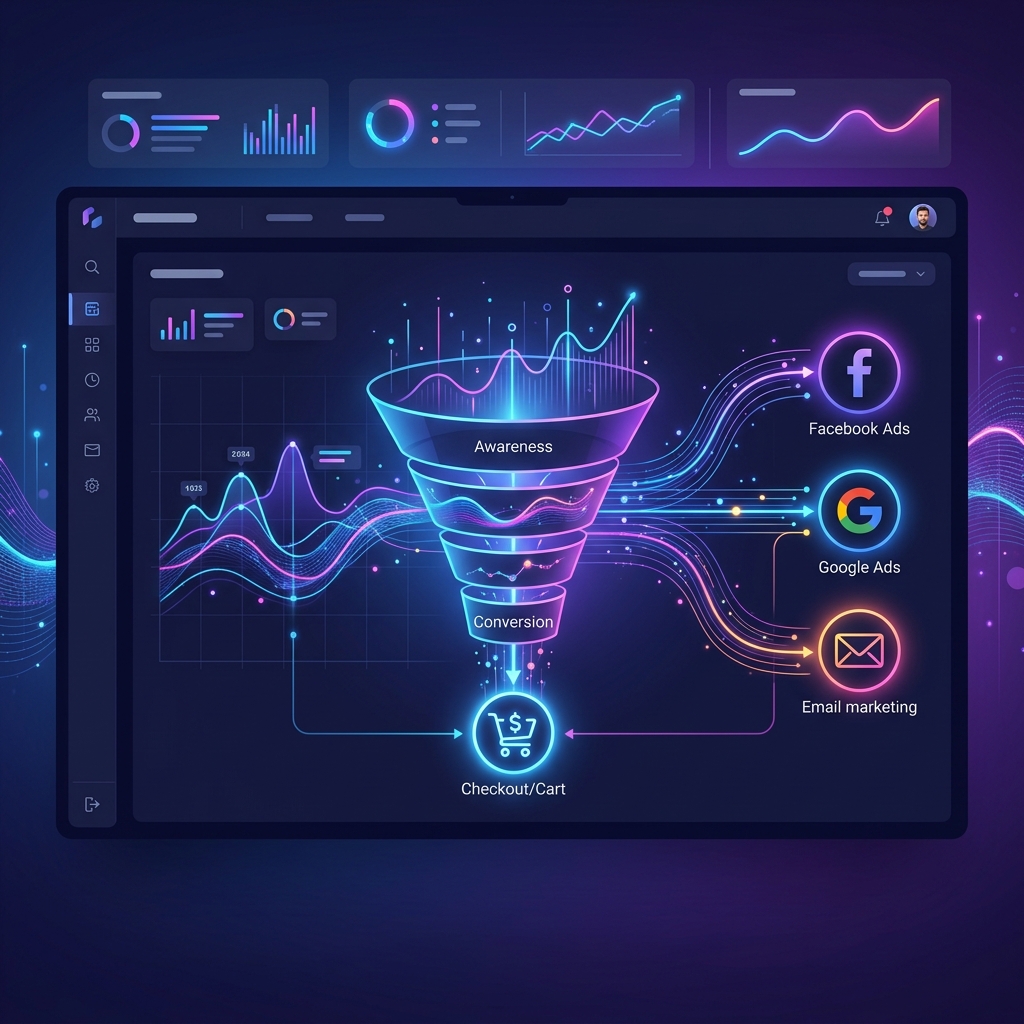
Hyros positions itself as an "AI-powered" attribution platform built primarily for media buyers running high ad spend — think agencies and seven- and eight-figure ecommerce or info-product businesses. Its core pitch is tracking a customer's full journey from first ad click to final sale (or booked call), even across devices and multiple touchpoints, and feeding that data back into ad platforms to improve targeting.
For businesses spending tens of thousands per month on ads, that level of precision can justify the cost — a few percentage points of improved ROAS at that scale is real money. But that's precisely the audience Hyros is built and priced for.
Why Hyros Is Priced the Way It Is
Hyros' pricing reflects its target customer: large ad spenders who treat attribution as a core part of scaling. The platform includes:
- Dedicated onboarding and account management
- Advanced AI-driven touchpoint modeling
- Deep integrations across multiple ad platforms and CRMs
- Support built around agencies managing multiple client accounts
None of that is inherently bad — it's just built for a specific scale of operation. If you're a solo coach running $3,000/month in Facebook ads, or a small Shopify store doing $20k/month in revenue, you're paying for infrastructure and support tiers designed for businesses 10–50x your size.
What Most Small Businesses Actually Need
Strip away the enterprise packaging, and most small businesses need three things from an attribution tool:
- 1Accurate source tracking — knowing which ad, campaign, or channel actually drove a sale or lead
- 2Reliable conversion matching — connecting that ad click to a real outcome (a sale, a booked call, a closed deal), even if it happens days or weeks later
- 3A clear, readable dashboard — not a data science project, just an answer to "what's working?"
Notice what's not on that list: multi-agency account management, elaborate AI attribution modeling across dozens of ad accounts, or enterprise onboarding calls. Most small businesses have one ad account, one or two sales channels, and a straightforward question they need answered.
Signs You're Paying for Features You Don't Use
If any of these sound familiar, you may be over-tooled:
- You use less than a quarter of the dashboard's reporting features
- You've never needed the "agency" or "multi-client" functionality
- Your team spends more time learning the tool than acting on its data
- You're paying a flat enterprise rate regardless of your actual ad spend or sales volume
- Support responses reference workflows for teams far larger than yours
None of this means the tool is bad — it just means the fit is off. Paying for capacity you'll never use is a common (and avoidable) cost for small businesses.
What to Look For in an Affordable Alternative
When evaluating a lower-cost attribution tool, prioritize:
| Feature | Why It Matters |
|---|---|
| Source/campaign tracking | Core requirement — without this, nothing else matters |
| Lead + sale tracking | Needed if you sell via calls/applications, not just instant checkout |
| Simple platform integrations | Shopify, WooCommerce, Stripe, or your CRM — whatever you actually use |
| Transparent, usage-based pricing | You shouldn't pay enterprise rates at small-business volume |
| A dashboard you'll actually check | Complexity that goes unused isn't a feature, it's friction |
This is exactly the gap tools like GetAttrib are built to fill — straightforward attribution tracking for sales and leads, priced for businesses that aren't yet (or may never need to be) at Hyros' scale.
A Practical Example
Say you run a small ecommerce store and a lead-gen funnel for a separate coaching offer. You're spending $1,500/month across Facebook and Google ads. You don't need AI-modeled multi-touch attribution across a dozen ad accounts — you need to know, plainly:
- Which campaign drove this week's Shopify orders
- Which ad actually resulted in a booked call that later closed
- Whether your Google spend or Facebook spend is doing more of the real work
A lighter-weight tool that connects directly to your store and your lead source, and shows this clearly, answers the actual question you're asking — without the extra layers built for teams managing client budgets in the six or seven figures.
Conclusion
Hyros is a capable platform, but its pricing and feature set are built for a specific type of customer — large-scale advertisers and agencies. If that's not you, there's no reason to pay as if it were. What most small businesses and lead-gen operators actually need is accurate, simple tracking of where sales and leads come from — not an enterprise media-buying suite.
Ready for clear, affordable attribution?
See exactly which campaigns are driving your sales and leads — free to connect, no credit card required.
Start tracking with GetAttrib